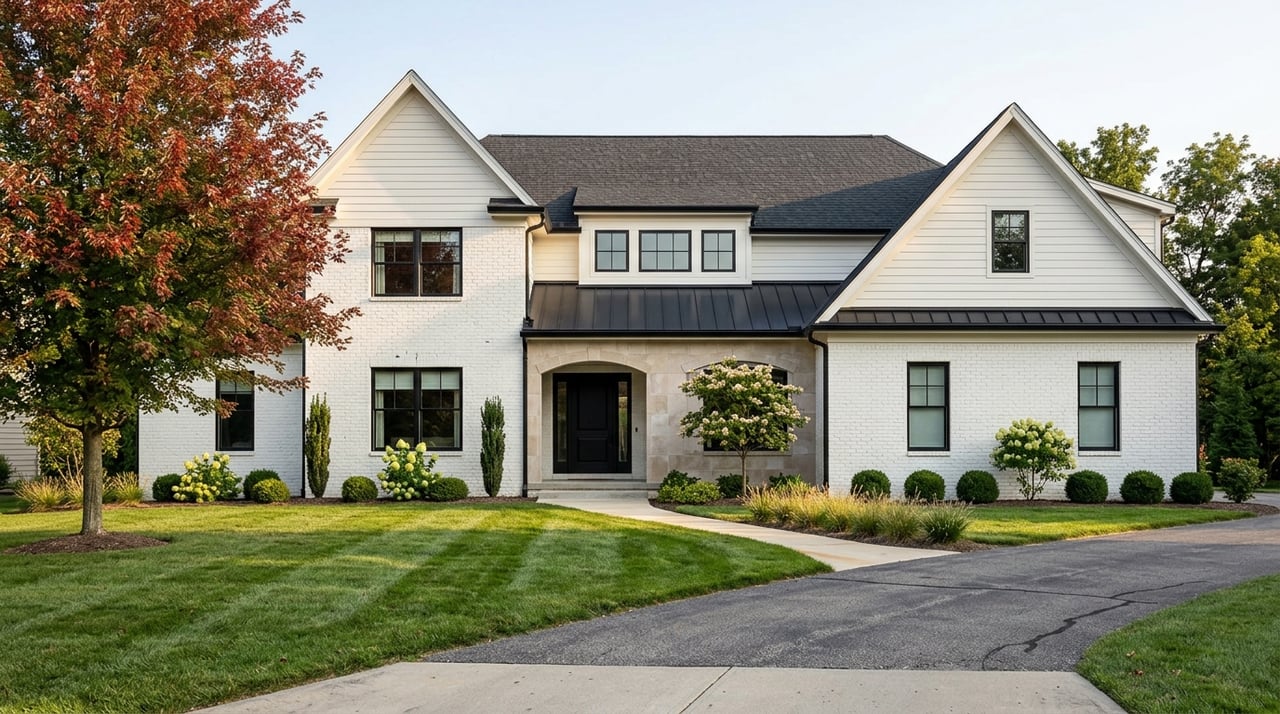
A house with a Williamsburg, Ohio address does not tell you what happens when someone flushes a toilet. Inside the 1.9 square miles of the Village of Williamsburg, wastewater runs to a treatment plant the village itself operates at the dead end of North 2nd Street, permitted and inspected by the Ohio EPA. Step outside the village line into Williamsburg Township, home to roughly 5,682 residents as of the 2020 census, and that same toilet almost certainly drains into a private septic system sitting somewhere in the yard, regulated not by the village but by Clermont County Public Health.
Most sellers assume septic is a buyer's problem: something that comes up during a home inspection, gets negotiated, and closes out. In Williamsburg Township, the more useful thing to understand is that the county already has an opinion about your septic system, on a schedule that has nothing to do with your listing date. That opinion can turn into a fee. The fee can turn into a lien. And none of it waits for you to decide it's time to sell.
Two Systems, One Zip Code
The village's arrangement is straightforward: a municipal plant, a public utility, a bill that behaves like any other utility bill. Township properties work differently. Clermont County Public Health runs what it calls the Operation Permit Program, and it covers close to 20,000 household sewage systems across the county's fourteen townships, Williamsburg Township among them. Systems with electrical components, like aerobic treatment units and mound systems with pumps, get inspected roughly every 19 months. Simpler gravity systems are checked about every 38 months. The county works through this on a rotating, township-by-township basis, and property owners get a postcard roughly 90 days before an inspector shows up.
That rotation runs whether or not a house is for sale. A property that last changed hands five years ago and hasn't been listed since could still be due for its routine county check next spring, and the current owner has no say in the timing.
The Bill Follows the Dirt, Not the Owner
Here is where it gets relevant to a closing table. If a system fails its inspection, the county documents the issue and mails it to the homeowner, who gets 30 days to fix it. If nothing changes, a certified Notice of Violation goes out with another 30-day window. Miss that too, and the county's Board of Health can declare the matter a code violation or nuisance, which triggers one more 30-day inspection cycle before the file goes to the Clermont County Prosecutor's Office.
Every step along the way, the operation permit fee itself is billed to the property, not to whoever happens to own it at the time. Ohio Revised Code 3709.091 lets the county place unpaid fees as a tax lien after 90 days of nonpayment, and that lien attaches to the parcel. A seller who bought a house four years ago with a lapsed operation permit fee already sitting on the books could find it waiting in a title search, generated by a problem they never caused and possibly never knew existed.
That is the part a generic septic guide will not tell you, because it is specific to how Clermont County structures its enforcement. The inspection is not a sale trigger. The fee is not personal. Both live with the address.
A Real Case Down State Route 133
This is not a hypothetical. In May 2025, the Clermont County Board of Health heard a request for an isolation distance variance at a property on State Route 133 in Williamsburg Township, the kind of case that comes up when a septic component sits closer to a well or a property line than the state's minimum setbacks allow, typically 50 feet from a private well and 10 feet from a property line under the state's household sewage treatment rules. The board approved it with staff contingencies attached. That kind of variance hearing is a normal part of how the county manages older systems on smaller township lots, and it is exactly the sort of finding that can surface mid-transaction if nobody has checked the record before a sign goes in the yard.
What Sits On Each Side of the Line
| Village of Williamsburg | Williamsburg Township | |
|---|---|---|
| Wastewater system | Municipal treatment plant, Ohio EPA regulated | Private septic, county regulated |
| Who inspects | Village public works / Ohio EPA | Clermont County Public Health |
| Inspection trigger | Ongoing utility oversight | Rotating township schedule, independent of sale |
| What can attach to the parcel | Standard utility billing | Operation permit fees, potential tax lien after 90 days unpaid |
What a Fix Actually Costs
If an inspection or a pre-listing check turns up a real problem, the range is wide. Comparable systems inspected elsewhere in Ohio run $10,000 to $30,000 or more to replace, depending on whether it's a conventional system or something more involved like a mound or aerobic unit. A pre-sale septic inspection itself is a smaller expense, commonly cited in the few hundred dollar range, and it buys the kind of documentation that makes a buyer's lender comfortable and a buyer's agent confident.
Clermont County also gives owners a way to get ahead of a failing system before it becomes a seller's problem. The county's Septic Rehabilitation Financing Program was overhauled in 2024, and as of the Board of Health's May 2025 meeting, it had reopened for new applications for the first time since that overhaul. For a homeowner sitting on an aging system who suspects it will not pass a buyer's scrutiny, that program is a legitimate path to fix the issue on their own terms rather than negotiating a credit at the closing table or watching a buyer walk.
Before You List, Pull Your Own Record
A few steps, done before a home ever goes on the market, remove almost all of this uncertainty:
- Search the address in the county's septic system database to see the property's operation permit and loan inspection history, including whether any fees are outstanding.
- Confirm which system actually serves the property. A Williamsburg mailing address inside the village limits may mean there is no septic question at all.
- If it has been years since anyone has looked at the tank or drain field, request a voluntary homeowner inspection through Clermont County Public Health. The county keeps records of past inspections, and a pattern of recurring issues is worth knowing before a buyer's inspector finds it first.
- Ask directly whether any operation permit fees or unresolved violations are tied to the parcel, since those can predate current ownership and still show up in a title search.
None of this requires waiting for a listing date. The record already exists. The only question is whether a seller looks at it before an offer is on the table or after.
The Takeaway
The county's inspection clock does not know or care when you plan to sell. It runs on its own calendar, and whatever it finds attaches to the property rather than to you personally. For anyone selling a home on private septic in Williamsburg Township, or buying one, that is the detail worth understanding before the first showing, not during option period.
Ragan McKinney Real Estate works with sellers across Williamsburg and the surrounding Clermont County townships every week, including plenty of acreage and rural properties where a septic record is part of the pre-listing conversation, not an afterthought. If you're weighing a sale and want to know what your specific property's county record shows before you price it, visit our Williamsburg neighborhood guide or head to our seller resources page. Better yet, reach out directly and let's talk through what your address actually shows.